Mastering Grant Writing Using AI
Grant writing is a critical skill for organizations and individuals seeking funding for projects, research, or community initiatives. Mastering this skill can open doors to financial support that can transform ideas into reality. This comprehensive guide will walk you through essential grant writing success tips, practical strategies, and resources to help you craft compelling proposals that stand out. AI has rapidly become a powerful ally for grant writers in 2026, transforming what was once a time-intensive, labor-heavy process into something far more efficient, strategic, and scalable—without fully replacing the human touch. Grant writing remains deeply human: it requires storytelling, mission alignment, relationship-building, and ethical judgment. But AI excels at accelerating repetitive, research-heavy, and structural tasks, often cutting proposal development time by 35–70% while helping writers focus on high-value creativity and strategy.
Understanding the Basics of Grant Writing Success Tips
Before diving into the writing process, it’s important to understand what grant writing entails. Grant writing is the art of preparing a formal request for funding from government agencies, foundations, or corporations. Success in grant writing depends on clarity, precision, and alignment with the funder’s priorities.
Key elements of a successful grant proposal include:
Clear objectives: Define what you want to achieve.
Detailed budget: Show how funds will be used responsibly.
Strong narrative: Tell a compelling story about your project.
Evidence of need: Demonstrate why your project matters.
Measurable outcomes: Explain how success will be evaluated.
For example, if you are applying for a community health grant, your proposal should clearly state the health issue, the target population, the activities planned, and how you will measure improvements.

Writing a grant proposal requires focus and attention to detail.
How Ai Helps
Accelerating Research & Opportunity Discovery
Funder matching & fit analysis — AI scans thousands of opportunities and matches them to your organization’s mission, past successes, and geographic focus faster than manual searches. Tools like Instrumentl’s Prospecting Assistant let you describe your project in plain language, then ask clarifying questions and suggest aligned funders.
Literature reviews & evidence gathering — AI summarizes academic papers, policy reports, and funder histories in seconds, identifying gaps, trends, and compelling statistics. This is especially valuable for research grants (NIH, NSF) where grounding in evidence is critical.
Competitive intelligence — AI analyzes previously funded proposals (where available) to extract winning language patterns, common pitfalls, and what resonated with specific funders.
Essential Grant Writing Success Tips for Beginners and Experts
Whether you are new to grant writing or looking to improve your skills, these tips will help you increase your chances of success:
Research thoroughly: Understand the funder’s mission, priorities, and application guidelines.
Follow instructions: Adhere strictly to formatting, word limits, and submission deadlines.
Be concise and clear: Avoid jargon and write in simple, direct language.
Use data and evidence: Support your claims with statistics, case studies, or testimonials.
Show collaboration: Highlight partnerships or community involvement.
Proofread carefully: Errors can undermine your credibility.
Tailor each proposal: Customize your application to fit each funder’s interests.
For instance, if a foundation focuses on environmental sustainability, emphasize how your project contributes to that goal rather than using a generic proposal.
How Ai Helps
Drafting & Structuring Proposals Faster
First-draft generation — Upload an RFP/solicitation and organizational background; AI generates tailored outlines, narratives, need statements, goals, and logic models grounded in the requirements. Tools like Granted AI, Grantboost, Grantable, and Cogrant excel here.
RFP/Solicitation parsing — AI reads the full funding announcement and extracts key sections, evaluation criteria, compliance rules, and required attachments—eliminating hours of manual highlighting.
Budget & timeline drafting — AI suggests realistic budgets, KPIs, and phased timelines based on similar funded projects, then flags inconsistencies or unrealistic projections.
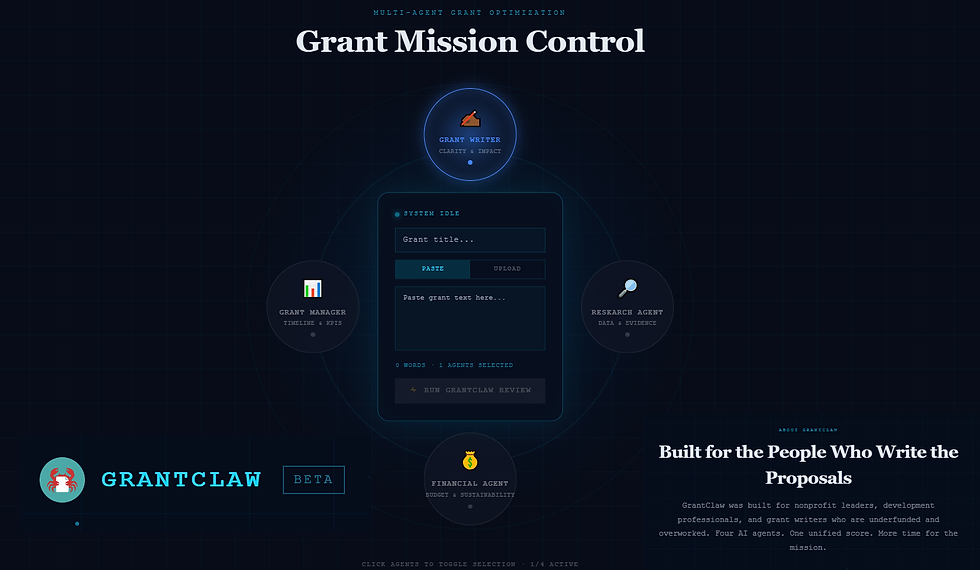
GrantClaw was built by Everything Is Dope to help grant writers 2X their submission rate.
What is the Best Way to Learn Grant Writing?
Learning grant writing effectively combines education, practice, and feedback. Here are some proven methods:
Attend a grant writing workshop: Participating in a grant writing workshop can provide hands-on experience, expert guidance, and networking opportunities.
Online courses and webinars: Many platforms offer structured courses that cover the fundamentals and advanced techniques.
Read successful proposals: Reviewing winning applications can reveal what works.
Practice writing: Draft proposals regularly and seek feedback from mentors or peers.
Join grant writing groups: Collaborate with others to share tips and resources.
For example, a nonprofit professional might start with an online course and then attend a local grant writing workshop to refine their skills and ask questions in real time.

Taking detailed notes during a grant writing workshop enhances learning.
Common Mistakes to Avoid in Grant Writing
Even experienced grant writers can fall into pitfalls that reduce their chances of success. Avoid these common mistakes:
Ignoring guidelines: Not following the funder’s instructions can lead to automatic rejection.
Being too vague: Lack of specific goals or unclear methods weakens your proposal.
Overestimating budget: Inflated or unrealistic budgets raise red flags.
Failing to demonstrate impact: Funders want to see tangible benefits.
Submitting late: Missing deadlines disqualifies your application.
Neglecting proofreading: Typos and grammatical errors suggest carelessness.
For example, a proposal that states “We will improve education” without explaining how, who will benefit, and what success looks like is unlikely to be funded.
How Ai Helps
Improving Clarity, Impact & Compliance
Editing & polishing — AI acts as a ruthless editor: tightens language, eliminates jargon, improves flow, strengthens impact statements, and ensures readability (especially helpful for non-native English writers or dense scientific content).
Compliance & risk checks — AI cross-checks against funder guidelines, flags missing sections, and verifies alignment with eligibility rules—reducing rejection risk from technical errors.
Voice preservation — Modern tools allow you to train AI on your organization’s past winning proposals so drafts stay in your authentic tone rather than sounding generic.
Tips for Writing a Compelling Grant Proposal Narrative
The narrative is the heart of your grant proposal. It should tell a story that convinces the funder your project is worthy of support. Here’s how to craft a compelling narrative:
Start with a strong introduction: Capture attention by highlighting the problem or opportunity.
Describe your project clearly: Explain what you will do, who will be involved, and the timeline.
Explain the need: Use data and anecdotes to show why your project matters.
Outline goals and objectives: Be specific about what you aim to achieve.
Detail your methods: Describe the activities and strategies you will use.
Discuss evaluation: Explain how you will measure success.
Include sustainability plans: Show how the project will continue after funding ends.
Use active voice and positive language to engage the reader. For example, instead of saying “Funds will be used to purchase equipment,” say “We will purchase state-of-the-art equipment to enhance program delivery.”
How Ai Helps
Real-World Outcomes & Adoption in 2026
Researchers using AI-assisted proposals have shown higher NIH funding success rates in preliminary studies (more similar to funded projects but with efficiency gains).
Nonprofits report 35–50% faster proposal turnaround and reduced administrative burden.
~24–60% of grant professionals now use AI regularly, with tools like ChatGPT/Claude (general), Granted AI, Grantboost, Grantable, Instrumentl Apply, and Cogrant leading the pack.
Early-career or small-team writers benefit most—AI levels the playing field by compressing weeks of work into days.
Final Thoughts on Achieving Grant Writing Success
Mastering grant writing is a journey that requires patience, practice, and continuous learning. By applying these grant writing success tips, you can improve your proposals and increase your chances of securing funding. Remember to stay organized, be clear and concise, and always align your project with the funder’s goals.
Important Caveats & Best Practices (2026 Reality Check)
AI proposals alone rarely win — Fully AI-generated drafts often lack originality, depth, or soul and can push toward "safe" ideas. Human oversight is essential.
Ethics & disclosure — Many funders (including NIH) now ask if AI was used; transparency is increasingly expected.
Risk of homogenization — Over-reliance can make proposals more similar to past winners, potentially reducing innovation.
Best use — Treat AI as a co-pilot: use it for research, outlines, first drafts, editing, and compliance checks. You provide strategy, storytelling, mission voice, and final judgment.
In short: AI doesn’t replace great grant writers in 2026—it supercharges them. Writers who master AI workflows (research acceleration → structured drafting → targeted polishing → strategic refinement) are winning more grants faster, especially in competitive federal and foundation spaces. The gap between AI-assisted and manual writers is widening quickly.
Investing time in a grant writing workshop or other educational resources can accelerate your progress and build confidence. With dedication and the right approach, you can turn your ideas into funded projects that make a real difference.
Start your grant writing journey today and unlock new opportunities for success!


Comments